As more of my poetry gets out in the world, as I enter the field of poetry/journal therapy, I must be conscious of a few things:
1) First do no harm
2) Say only what is necessary, kind, and true
3) What has the power to heal has the power to hurt
4) Words bear power in their lucidity and universality. Sometimes readers think that if they resonate with the words they are also resonating with the writer; they believe they know the writer and make assumptions of false intimacy. Beware. Be careful. Be care-filled.
Tuesday, June 26, 2007


Am I best that way?

"I am lonely, lonely
I was born to be lonely
I am best that way..." ~ William Carlos Williams
Was I born to fly solo
cries the red-tailed hawk
as she canvases the desert sky?
Was I born to be alone
asks the single thistle in the sand,
her scarlet center aching to bloom?
Was I born to be lonely
coos the mourning dove,
her song echoing through redrock caves
And what of the one
cluster of paintbrush,
the one magpie perched
on a manzanita branch,
the mariposa lily,
cream white petals
flung open to the heat
of each day?
What of the one poet
hiking alone
with a single pack
a single pen
and a single page?
She is alone by choice
she notes
it is best that way
when the desert is in full bloom.
It is best that way,
alone sometimes
she is best that way,
alone.
She is best
alone, or not, but for now
she is
and she is no less
alone.
I was born to be lonely
I am best that way..." ~ William Carlos Williams
Was I born to fly solo
cries the red-tailed hawk
as she canvases the desert sky?
Was I born to be alone
asks the single thistle in the sand,
her scarlet center aching to bloom?
Was I born to be lonely
coos the mourning dove,
her song echoing through redrock caves
And what of the one
cluster of paintbrush,
the one magpie perched
on a manzanita branch,
the mariposa lily,
cream white petals
flung open to the heat
of each day?
What of the one poet
hiking alone
with a single pack
a single pen
and a single page?
She is alone by choice
she notes
it is best that way
when the desert is in full bloom.
It is best that way,
alone sometimes
she is best that way,
alone.
She is best
alone, or not, but for now
she is
and she is no less
alone.
Saturday, May 12, 2007
It has been awhile
I have been immersed in academic writing, preparing old work for poetry submissions (just sent out my first full length poetry manuscript), and so haven't been as communicative on a blog scale.
But here are a few poems:
Living at the Limit of the Habitable World
Alone,
the albatross,
no wish to swallow sky,
cries out the salt of sea water
my home
(Wo)
Man-i-
fest light.
May I please have
epiphany –
seamlessly celebrate
reason and mystery –
together in one small yellow
corner of un-i-verse, to claim
my own
my whole
But here are a few poems:
Living at the Limit of the Habitable World
Alone,
the albatross,
no wish to swallow sky,
cries out the salt of sea water
my home
(Wo)
Man-i-
fest light.
May I please have
epiphany –
seamlessly celebrate
reason and mystery –
together in one small yellow
corner of un-i-verse, to claim
my own
my whole
Friday, March 30, 2007
A Lenten Question
Encountering Dangerous Beauty
Are you asleep in uninhabited salt sands,
parched places of apathy, or are you
agitated in desert wastelands ~
awake in the dark light where mystics stand,
or do you slump in your usual Sunday pew?
Are you asleep in uninhabited salt sands?
Do you fill your life with privileges of every brand
or do you empty your cup of all you once knew ~
agitated in desert wastelands.
What do you require to acquire? How do you fill your hands?
Can you reduce possessions to just a few
or are you asleep in uninhabited salt sands?
Commercialize, privatize, merchandise: your life in a can.
What do you get from all this? What do you construe ~
agitated in desert wastelands?
To bloom in the desert, don’t you understand,
you must let go of the last hope of morning dew.
Are you asleep in uninhabited salt sands
or vitally agitated in desert wastelands?
Are you asleep in uninhabited salt sands,
parched places of apathy, or are you
agitated in desert wastelands ~
awake in the dark light where mystics stand,
or do you slump in your usual Sunday pew?
Are you asleep in uninhabited salt sands?
Do you fill your life with privileges of every brand
or do you empty your cup of all you once knew ~
agitated in desert wastelands.
What do you require to acquire? How do you fill your hands?
Can you reduce possessions to just a few
or are you asleep in uninhabited salt sands?
Commercialize, privatize, merchandise: your life in a can.
What do you get from all this? What do you construe ~
agitated in desert wastelands?
To bloom in the desert, don’t you understand,
you must let go of the last hope of morning dew.
Are you asleep in uninhabited salt sands
or vitally agitated in desert wastelands?
Tuesday, February 27, 2007
writing prompt response
Visualize an edge. It can be an edge of something tangible or of experience. In as much detail as you can, feel the physical setting -- colors, temperatures (it's cold way down there Laura Nyro sings), textures, sounds -- and write what happens.
When I was a kid, younger than 10, I had a recurring dream about a narrow suspension bridge. I had to walk it to the other end, where the light was. On either side of the two-foot wide bridge was an abyss (How I knew the word abyss at the ripe old age of eight, I don't know, but I also knew the word infinity in kindergarten. "There must be an infinite number of cookies in that box," I commented during a lesson on estimates.). I knew I couldn't fall and I couldn't jump into the place of nothing, giving up. The abyss echoed with my cries, sometimes glowed red in the dark, sometimes spun a chilly whirlpool of nothingness. As unappealing as walking this bridge path was, the abyss was less appealing.
At the time, I wasn't so wide as I am now, my feet not so long, I was a delicate child, a long drink of water, my Aunt called me. I played soccer and kick ball, was the square dance expert in 4th grade. I wore shorts under my pleated, seersucker dresses and swung round and round on the parallel bar, my long stringy hair sweeping the dusty ground at every rotation. I was absolutely capable of traversing this precipice of my dream, yet I was still afraid. The bridge was invisible, surrounded by fog or dry ice, an eerie werewolf movie setting.
When my older brothers were charged with babysitting my sister and me, they forced us to watch Dark Shadows and any werewolf or vampire thriller that filled the black and white television screen of my childhood. We lived in the Pennsylvania woods, in a four-story country home with no curtains on the windows. We didn't need curtains for privacy. We had trees. My brothers would begin the evening following our TV dinners with a news story. "Did you hear about the crazy guy who escaped from the Bedlam House?" Then, as we are watching horror flicks on the boob tube, one brother disappears with the excuse of homework.
Suddenly, a knock on the door. Parents aren't due home until after bedtime. We don't lock our doors in the country. Nobody visits us at night. Stomach tightens. Eyes dart at every foreign sound.
A tree branch scratches against the night-blackened window, or is it a branch? Goosebumps.
I don't know how to swear yet and I'm not allowed to say, "Oh my God." But a hand appears, pressed against the winter window pane.
That face.
I scream.
My brother laughs. That face, my other brother leering through the window as dry-ice covers the gravesites on the television and scary music from some unremembered composer imprints my fear of fog.
I cannot walk this foggy precipice. I cannot see the pathway. I cannot see at all, but I have other senses, and I don’t know the name for it then, but I am a kinesthetic learner. I feel my way through life. So that’s what I do in my dream. Each step an experiment in survival, I inch my way along. In the dream, I never fall and I never reach the end. Black and white as all dreams, black and white as the old RCA television, I was called to live in gray and still do. There are no absolutes, only color and courage over fear, and sweet tension of cello strings in horror movies anticipating a pinpoint of light at the very end. There is only infinity and the abyss. Take your pick.
When I was a kid, younger than 10, I had a recurring dream about a narrow suspension bridge. I had to walk it to the other end, where the light was. On either side of the two-foot wide bridge was an abyss (How I knew the word abyss at the ripe old age of eight, I don't know, but I also knew the word infinity in kindergarten. "There must be an infinite number of cookies in that box," I commented during a lesson on estimates.). I knew I couldn't fall and I couldn't jump into the place of nothing, giving up. The abyss echoed with my cries, sometimes glowed red in the dark, sometimes spun a chilly whirlpool of nothingness. As unappealing as walking this bridge path was, the abyss was less appealing.
At the time, I wasn't so wide as I am now, my feet not so long, I was a delicate child, a long drink of water, my Aunt called me. I played soccer and kick ball, was the square dance expert in 4th grade. I wore shorts under my pleated, seersucker dresses and swung round and round on the parallel bar, my long stringy hair sweeping the dusty ground at every rotation. I was absolutely capable of traversing this precipice of my dream, yet I was still afraid. The bridge was invisible, surrounded by fog or dry ice, an eerie werewolf movie setting.
When my older brothers were charged with babysitting my sister and me, they forced us to watch Dark Shadows and any werewolf or vampire thriller that filled the black and white television screen of my childhood. We lived in the Pennsylvania woods, in a four-story country home with no curtains on the windows. We didn't need curtains for privacy. We had trees. My brothers would begin the evening following our TV dinners with a news story. "Did you hear about the crazy guy who escaped from the Bedlam House?" Then, as we are watching horror flicks on the boob tube, one brother disappears with the excuse of homework.
Suddenly, a knock on the door. Parents aren't due home until after bedtime. We don't lock our doors in the country. Nobody visits us at night. Stomach tightens. Eyes dart at every foreign sound.
A tree branch scratches against the night-blackened window, or is it a branch? Goosebumps.
I don't know how to swear yet and I'm not allowed to say, "Oh my God." But a hand appears, pressed against the winter window pane.
That face.
I scream.
My brother laughs. That face, my other brother leering through the window as dry-ice covers the gravesites on the television and scary music from some unremembered composer imprints my fear of fog.
I cannot walk this foggy precipice. I cannot see the pathway. I cannot see at all, but I have other senses, and I don’t know the name for it then, but I am a kinesthetic learner. I feel my way through life. So that’s what I do in my dream. Each step an experiment in survival, I inch my way along. In the dream, I never fall and I never reach the end. Black and white as all dreams, black and white as the old RCA television, I was called to live in gray and still do. There are no absolutes, only color and courage over fear, and sweet tension of cello strings in horror movies anticipating a pinpoint of light at the very end. There is only infinity and the abyss. Take your pick.
Wednesday, February 21, 2007
Listen In and Out
Reading Response to a lecture: Parks, Suzan-Lori. Portland Arts & Lecture Series. Arlene Schnitzer Concert Hall, Portland, Oregon. 8 February 2007.
She skips onto the stage, tosses her waist length dreadlocks over her shoulders and plants her feet wide and pigeon-toed like Lily Tomlin’s Edith Ann. Suzan-Lori, who changed her name from Susan to Suzan as the result of a typo on a promo poster, dons a coral knee-length straight skirt, gray top, and calf-high black cowboy boots. With hands on hips, elbows and shoulders thrust slightly forward in oxymoronic cuteness, knees locked back, she reminds me of Bad Becky, a childhood neighbor girl. I expect Suzan to draw toy pistols from a hip holster and zap the audience with literary witticisms. Instead, this 42-year-old Pulitzer Prize winner (Topdog/Underdog (2001)) begins with, “Anna Nicole Smith died today, and you know, people laugh, and it’s supposed to be funny, but, you know, she was a person too. As nutty and wacky and loopy, she was a person, too…so just, like, wave to her as she leaves the building, because she was something.” Such compassion emanated throughout her 90 minute homily. “Listen in and out,” she advises through a slight lisp. Then she rolls to the outside of her feet in an unassuming way and asks how to “conduct oneself in the presence of the spirit.”
I am temporarily seized by this muse, by the suggestion to treat inspiration “as an honored guest” and “entertain all my far-out ideas.” Only occasionally in my 46 years have I fully entertained the muse and my edgy, unconventional ideas. Typically, I am so consumed by a need for approval that I do not dare blurt out the true meanderings of my mazy mind. As a child, I spent most of my time in my imagination, creating fantasy lives when I was bored needing to get out of yard work, or detach from a socially painful elementary school scenario. I visited complex story lines every night I couldn’t fall asleep. I used the index finger on each hand to represent a character and created dialogues between the two fingers in the back seat of my mom’s lime green station wagon. I would whisper, not wanting to be caught, and occasionally my mother would ask what I was doing back there. “Nothing,” I would lie as I worked out the hurts of my youth on my index fingers.
Parks also revealed her imaginary childhood adventures under the piano waiting for her mother’s high heels to click by. She read Harriet the Spy and Hotel for Dogs and then, when asked, “What are you doing under there?” responded with, “I’m writing my novel.”
Wish I had thought of that line for myself.
“The play is always happening,” she declares. “I just plucked something out of the ether.” Suzan-Lori Parks wrote a play a day for a year. Her efforts resulted in the recent publication of 365 Days/365 Plays (2006). Many of the works are in production at theaters across the country. If the voices tell you to write a play a day for a year, you say “OK!” Parks explained. “In the presence of the spirit, you don’t say, ‘What do you mean?’ ”
I remember reading that Georgia O’Keefe painted a painting a day for the discipline, or perhaps to stir her artistic compost.
I started writing a poem a day for a while.
Then it became a poem a week, a poem a month, and finally a poem if I happened to be inspired and made the time to write it down.
I slighted the spirit yet again ~ didn’t even offer her a glass of wine when she came to visit because I was too determined to lead a proper life with a proper income from a acceptable job, own a house, keep it clean, go to bed by 10:00 and never reveal the true outrageousness of my spirit. After 1825 days of depression, I finally decided to quit my stable job, sell my clean house, stay up after midnight, and trust the voice that dared me to write, fill that life with constant creation and open every pore to the spirit with a resounding, “Yes!”
So here I am, signed up for a semester at Goddard and writing a Villanelle a day, well, not quite every day, but the point is, I let myself be consumed by the spirit, in love with the spirit, and I listen to words outside my own undulating mind.
My good friend and housemate Donna sent me a card while I was at Goddard. “Gazing out the window while rinsing the morning dishes, she chased her thoughts in circles, until they escaped through the screen and onto the mulberry tree. From a distance they actually made sense.” On the back of the card by Susan Mrosek it read, “A person needs a place to unfold their truths and extract the humor. That place is the Pondering Pool. Perhaps I’ll see you there.”
So here I am, in the ‘Pondering Pool’, wondering about the space between and the power of language within that space. I long to breathe only the ether that Suzan-Lori Parks speaks of; I long to be immersed in synonyms and similes, hyperbole and raw truth, the day to day 365 every day fascination with language as a symbol for enunciating our human condition. I stepped out to the edge of the tide and the shoreline; now I walk the wavy waters of artistic unknowing and, like Parks, I hope to go to Virginia Woolf’s lighthouse and remember who I am and who I am supposed to be.
She skips onto the stage, tosses her waist length dreadlocks over her shoulders and plants her feet wide and pigeon-toed like Lily Tomlin’s Edith Ann. Suzan-Lori, who changed her name from Susan to Suzan as the result of a typo on a promo poster, dons a coral knee-length straight skirt, gray top, and calf-high black cowboy boots. With hands on hips, elbows and shoulders thrust slightly forward in oxymoronic cuteness, knees locked back, she reminds me of Bad Becky, a childhood neighbor girl. I expect Suzan to draw toy pistols from a hip holster and zap the audience with literary witticisms. Instead, this 42-year-old Pulitzer Prize winner (Topdog/Underdog (2001)) begins with, “Anna Nicole Smith died today, and you know, people laugh, and it’s supposed to be funny, but, you know, she was a person too. As nutty and wacky and loopy, she was a person, too…so just, like, wave to her as she leaves the building, because she was something.” Such compassion emanated throughout her 90 minute homily. “Listen in and out,” she advises through a slight lisp. Then she rolls to the outside of her feet in an unassuming way and asks how to “conduct oneself in the presence of the spirit.”
I am temporarily seized by this muse, by the suggestion to treat inspiration “as an honored guest” and “entertain all my far-out ideas.” Only occasionally in my 46 years have I fully entertained the muse and my edgy, unconventional ideas. Typically, I am so consumed by a need for approval that I do not dare blurt out the true meanderings of my mazy mind. As a child, I spent most of my time in my imagination, creating fantasy lives when I was bored needing to get out of yard work, or detach from a socially painful elementary school scenario. I visited complex story lines every night I couldn’t fall asleep. I used the index finger on each hand to represent a character and created dialogues between the two fingers in the back seat of my mom’s lime green station wagon. I would whisper, not wanting to be caught, and occasionally my mother would ask what I was doing back there. “Nothing,” I would lie as I worked out the hurts of my youth on my index fingers.
Parks also revealed her imaginary childhood adventures under the piano waiting for her mother’s high heels to click by. She read Harriet the Spy and Hotel for Dogs and then, when asked, “What are you doing under there?” responded with, “I’m writing my novel.”
Wish I had thought of that line for myself.
“The play is always happening,” she declares. “I just plucked something out of the ether.” Suzan-Lori Parks wrote a play a day for a year. Her efforts resulted in the recent publication of 365 Days/365 Plays (2006). Many of the works are in production at theaters across the country. If the voices tell you to write a play a day for a year, you say “OK!” Parks explained. “In the presence of the spirit, you don’t say, ‘What do you mean?’ ”
I remember reading that Georgia O’Keefe painted a painting a day for the discipline, or perhaps to stir her artistic compost.
I started writing a poem a day for a while.
Then it became a poem a week, a poem a month, and finally a poem if I happened to be inspired and made the time to write it down.
I slighted the spirit yet again ~ didn’t even offer her a glass of wine when she came to visit because I was too determined to lead a proper life with a proper income from a acceptable job, own a house, keep it clean, go to bed by 10:00 and never reveal the true outrageousness of my spirit. After 1825 days of depression, I finally decided to quit my stable job, sell my clean house, stay up after midnight, and trust the voice that dared me to write, fill that life with constant creation and open every pore to the spirit with a resounding, “Yes!”
So here I am, signed up for a semester at Goddard and writing a Villanelle a day, well, not quite every day, but the point is, I let myself be consumed by the spirit, in love with the spirit, and I listen to words outside my own undulating mind.
My good friend and housemate Donna sent me a card while I was at Goddard. “Gazing out the window while rinsing the morning dishes, she chased her thoughts in circles, until they escaped through the screen and onto the mulberry tree. From a distance they actually made sense.” On the back of the card by Susan Mrosek it read, “A person needs a place to unfold their truths and extract the humor. That place is the Pondering Pool. Perhaps I’ll see you there.”
So here I am, in the ‘Pondering Pool’, wondering about the space between and the power of language within that space. I long to breathe only the ether that Suzan-Lori Parks speaks of; I long to be immersed in synonyms and similes, hyperbole and raw truth, the day to day 365 every day fascination with language as a symbol for enunciating our human condition. I stepped out to the edge of the tide and the shoreline; now I walk the wavy waters of artistic unknowing and, like Parks, I hope to go to Virginia Woolf’s lighthouse and remember who I am and who I am supposed to be.
Ash Wednesday
This is my fifth year with ash on my forehead. The church I attend conducts a moving Ash Wednesday service that invites us to make clay sculptures, burn what we need to let go of, wash our hands in warm water, anoint ourselves with oil, take communion, and receive the ashes of atonement. I've written several poems about this experience over the years. Here they are:
(2003)
I am not afraid to drive in the rain
to church
with the radio and me blasting
Melissa Etheridge
I am your passion, your promise, your end.
I am not afraid to drive to church in the rain
out of ashes and darkness
into New life
and wilderness
I am not afraid to step in
to a moment of clay
shell empty
not afraid to create thick red lilies
out of playdoh
with round pure white centers
that rest against a receptive bowl
Can I not do with you
just as this potter has done?
I hold in my praying hands
the clay
and fear not.
I am not afraid to dip my fingers
in the swirling warm waters of salvation
while hips sway
and sweet vanilla oil of forgiveness
drips from my heart
I am not afraid to remember
communion
union
I burn fear and spread the ashes
a cross
my forehead
oh blue flame of eternal love
enter my heart in the place of forever
refined
I am not afraid to step out
exit prayer
enter poetry
on secular sidewalks
I wear a bold testament to faith
a scarlet “A”
unAshamed
I step out
into darkness
fearless in my knowing
that I alone
am marked
I long for a hand of friendship
as stranger’s eyes avert
as if I am disabled
handicapped by my declaration of faith
I sit through the stories of women I don’t know
women I have yet to love
and I quiver with the first gasp of fear
I am no longer home
here
I ask how am I to move with Grace
between poetry and prayer?
Only if my poetry is my prayer
Take me back to sanctuary
certain of You
and not afraid
I press my wrists to my inscribed forehead
not out of shame
but as a way to quiet my faith
and humble my love
humble as dust and ashes
I am not afraid to leave the familiar
and enter the unknown
I am not afraid to drive home in the rain
alone
and, and, and
Finding Form (March 2004)
"Can I not do with you just as this potter has done?"
Put your hands in the clay
Put my hands in the clay
Let the heat of our hands
the heat of our histories
sculpt the cool amorphous mass
Let the heat of our hands
our fingers
curl, stretch, dig,
unfurl our lives
sculpt our love
Let the heat rise above the coolness
of fear and unknowing
Rise and shape the new
Encountering Dangerous Beauty (2/11/07)
Are you asleep in uninhabited salt sands,
parched places of apathy, or are you
agitated in desert wastelands ~
awake in the dark light where mystics stand,
or do you slump in your usual Sunday pew?
Are you asleep in uninhabited salt sands?
Do you fill your life with privileges of every brand
or do you empty your cup of all you once knew ~
agitated in desert wastelands.
What do you require to acquire? How do you fill your hands?
Can you reduce possessions to just a few
or are you asleep in uninhabited salt sands?
Commercialize, privatize, merchandise: your life in a can.
What do you get from all this? What do you construe ~
agitated in desert wastelands?
To bloom in the desert, don’t you understand,
you must let go of the last hope of morning dew.
Are you asleep in uninhabited salt sands
or vitally agitated in desert wastelands?
(2003)
I am not afraid to drive in the rain
to church
with the radio and me blasting
Melissa Etheridge
I am your passion, your promise, your end.
I am not afraid to drive to church in the rain
out of ashes and darkness
into New life
and wilderness
I am not afraid to step in
to a moment of clay
shell empty
not afraid to create thick red lilies
out of playdoh
with round pure white centers
that rest against a receptive bowl
Can I not do with you
just as this potter has done?
I hold in my praying hands
the clay
and fear not.
I am not afraid to dip my fingers
in the swirling warm waters of salvation
while hips sway
and sweet vanilla oil of forgiveness
drips from my heart
I am not afraid to remember
communion
union
I burn fear and spread the ashes
a cross
my forehead
oh blue flame of eternal love
enter my heart in the place of forever
refined
I am not afraid to step out
exit prayer
enter poetry
on secular sidewalks
I wear a bold testament to faith
a scarlet “A”
unAshamed
I step out
into darkness
fearless in my knowing
that I alone
am marked
I long for a hand of friendship
as stranger’s eyes avert
as if I am disabled
handicapped by my declaration of faith
I sit through the stories of women I don’t know
women I have yet to love
and I quiver with the first gasp of fear
I am no longer home
here
I ask how am I to move with Grace
between poetry and prayer?
Only if my poetry is my prayer
Take me back to sanctuary
certain of You
and not afraid
I press my wrists to my inscribed forehead
not out of shame
but as a way to quiet my faith
and humble my love
humble as dust and ashes
I am not afraid to leave the familiar
and enter the unknown
I am not afraid to drive home in the rain
alone
and, and, and
Finding Form (March 2004)
"Can I not do with you just as this potter has done?"
Put your hands in the clay
Put my hands in the clay
Let the heat of our hands
the heat of our histories
sculpt the cool amorphous mass
Let the heat of our hands
our fingers
curl, stretch, dig,
unfurl our lives
sculpt our love
Let the heat rise above the coolness
of fear and unknowing
Rise and shape the new
Encountering Dangerous Beauty (2/11/07)
Are you asleep in uninhabited salt sands,
parched places of apathy, or are you
agitated in desert wastelands ~
awake in the dark light where mystics stand,
or do you slump in your usual Sunday pew?
Are you asleep in uninhabited salt sands?
Do you fill your life with privileges of every brand
or do you empty your cup of all you once knew ~
agitated in desert wastelands.
What do you require to acquire? How do you fill your hands?
Can you reduce possessions to just a few
or are you asleep in uninhabited salt sands?
Commercialize, privatize, merchandise: your life in a can.
What do you get from all this? What do you construe ~
agitated in desert wastelands?
To bloom in the desert, don’t you understand,
you must let go of the last hope of morning dew.
Are you asleep in uninhabited salt sands
or vitally agitated in desert wastelands?
Monday, February 12, 2007
The Birds


While in Vermont we visited an odd little science museum begun by Horace Fairbanks. There were several "paintings" made from butterfly wings and bugs, yes, really beetles and things. I was most drawn to the taxidermy exhibit of tropical birds of paradise followed by the fashion exhibit of the hats made out of these birds.
Price of Beauty
The birds of paradise pay
fascinating feathery frills
marketed for millinery trade
magenta bellies and emerald throats
Fascinating feathery frills
a plume craze into extinction
magenta bellies and emerald throats
women wear the males on their heads
A plume craze into extinction
one ounce of feathers for two ounces of gold
women wear the males on their heads
courtship props of the highest price
One ounce of feathers for two ounces of gold
I would just die to have that hat.
Courtship props of the highest price
the birds of paradise pay
The birds of paradise pay
fascinating feathery frills
marketed for millinery trade
magenta bellies and emerald throats
Fascinating feathery frills
a plume craze into extinction
magenta bellies and emerald throats
women wear the males on their heads
A plume craze into extinction
one ounce of feathers for two ounces of gold
women wear the males on their heads
courtship props of the highest price
One ounce of feathers for two ounces of gold
I would just die to have that hat.
Courtship props of the highest price
the birds of paradise pay
Friday, February 09, 2007
The Villanelle
Looks like blogging is going to help me in my studies. I am researching poetry forms, looking at villanelles right now and would love your feedback. What does the poem say to you? Apologies for the MLA citing in the intro...I need to write a critical, formal essay and these are my notes:
The villanelle began as an Italian rustic field song, sung as a round, which most likely accompanied various stages of farm tasks. This poetic form might be classified as a work song, a form most identified with African-American heritage involving repetition with the rhythm of the task. The song-like origins of the form unconsciously allow us to enter the language of spirit. A liberated language, beyond words, beyond utterances, beyond non-verbal communication, the language of spirit is an integration of all three forms of communication in a story without syntax – a story that divorces itself from context in order to generate the new. The villanelle was revived by the French, via Jean Passerat who gave the form its current metrical and rhyme structure. Oscar Wilde unleashed the form into the 20th century with his villanelle written in 1891. The contemporary appeal for such a rigid form, according to Strand and Boland (8), is that it refuses a linear narrative, and instead cultivates a spiraling repetition that allows both the reader and the poet to experience a transformational déjà vu. Like the double helix at the core of our being, a spiral motion and shape allows us to witness where we have been without going back and glimpse at where we are going without charging forward before we are ready. “Its repeated lines, the circularity of its stanzas, become, as the reader listens, a repudiation of forward motion, of temporality and therefore, finally, of dissolution” (Strand 8). The villanelle is a form that remains in the present; an ideal form for holding in the thin places of our lives while still having the velcrox of the known with the possibility of re-configuration or resurrection into the new unknown. As Dorothee Soelle says in her book on mysticism and resistance, “We need a new language in order to plunge into the cloud of unknowing” (Soelle 59).
If a man falls in a forest
will he rise
from clay and solitude, by degrees,
through a blessed throat of communion cries
he lies
naked among russet leaves.
Will he rise?
Winter skies ~
dream haloes light frozen trees
and a blessed throat of communion cries.
He relies
on the night watch, crouching, clutching rib and knees
Will he rise?
What if the male of the species dies?
Released to a starry night crossing, he pleas
through a blessed throat of communion cries.
What if he lives, cornered, at sunrise,
strapped in gun-metal gray, old way, patriarchal seize
Will he lie or will he rise
through a blessed throat of communion cries?
The villanelle began as an Italian rustic field song, sung as a round, which most likely accompanied various stages of farm tasks. This poetic form might be classified as a work song, a form most identified with African-American heritage involving repetition with the rhythm of the task. The song-like origins of the form unconsciously allow us to enter the language of spirit. A liberated language, beyond words, beyond utterances, beyond non-verbal communication, the language of spirit is an integration of all three forms of communication in a story without syntax – a story that divorces itself from context in order to generate the new. The villanelle was revived by the French, via Jean Passerat who gave the form its current metrical and rhyme structure. Oscar Wilde unleashed the form into the 20th century with his villanelle written in 1891. The contemporary appeal for such a rigid form, according to Strand and Boland (8), is that it refuses a linear narrative, and instead cultivates a spiraling repetition that allows both the reader and the poet to experience a transformational déjà vu. Like the double helix at the core of our being, a spiral motion and shape allows us to witness where we have been without going back and glimpse at where we are going without charging forward before we are ready. “Its repeated lines, the circularity of its stanzas, become, as the reader listens, a repudiation of forward motion, of temporality and therefore, finally, of dissolution” (Strand 8). The villanelle is a form that remains in the present; an ideal form for holding in the thin places of our lives while still having the velcrox of the known with the possibility of re-configuration or resurrection into the new unknown. As Dorothee Soelle says in her book on mysticism and resistance, “We need a new language in order to plunge into the cloud of unknowing” (Soelle 59).
If a man falls in a forest
will he rise
from clay and solitude, by degrees,
through a blessed throat of communion cries
he lies
naked among russet leaves.
Will he rise?
Winter skies ~
dream haloes light frozen trees
and a blessed throat of communion cries.
He relies
on the night watch, crouching, clutching rib and knees
Will he rise?
What if the male of the species dies?
Released to a starry night crossing, he pleas
through a blessed throat of communion cries.
What if he lives, cornered, at sunrise,
strapped in gun-metal gray, old way, patriarchal seize
Will he lie or will he rise
through a blessed throat of communion cries?
Monday, February 05, 2007
To the Manor Born

This is the Manor House at Goddard where I had most of my classes last week. Lovely snow! So Vermont-esque. I don't know how much I'll be able to blog in the future as I pursue my studies, but I'll try to put stuff on as it comes.
Imagine it is Still Ground Hog Day
I'm a bit behind in blogging.
Groundhog Day
Unearth us
rain or shine
from the bowels of history
from the womb
out
to the light of our future
now
rain and shine
there are shadows
but they no longer confine
to yesterday
to unspoken mystery
they are
our shadows
and we fear not
stepping in
to our divine
rain and shine
so sublime
today
is the day
step out
to step in
to shine
and re-define
Groundhog Day
Unearth us
rain or shine
from the bowels of history
from the womb
out
to the light of our future
now
rain and shine
there are shadows
but they no longer confine
to yesterday
to unspoken mystery
they are
our shadows
and we fear not
stepping in
to our divine
rain and shine
so sublime
today
is the day
step out
to step in
to shine
and re-define
Wednesday, January 17, 2007
White Light of Morning

Snowing today and I am less than eager
to drive down Sandy Blvd. for a first day of work.
Cars park in the middle of the road here,
even with a mere two inches of powder.
I’d rather watch the fat flakes rain down
in what certainly looks like a school closure day,
and that bright light of Donna and Jackson
sledding on the sidewalk.
I should call Anne and Nancy in Colorado
and remind them of New Year’s Day that one year,
so much promise not to be realized until now,
after everyone moved away.
Last night I dreamed of poems on the page,
an allegoric past of ink-stained affairs
I erased and re-wrote, but couldn’t wipe her out
so I licked a stamp and mailed it all away.
The day looks so frail, but otherwise, it’s just
another northwest winter, sky a pewter gray
and the just unfurling children,
full of oatmeal and enthusiasm
with more than a hint of ecstasy
filling their Michelin-man snowsuits
while the parents gather on the corner
to brainstorm child care.
Nobody is going anywhere today,
except to ski in the cemetery,
wave hello to Judge Clifford
and etch cherubic angels in the grass-speckled snow.
Outside my window, between SUVs
and a few enduring maple,
three days past Epiphany,
tiny white Christmas lights still blink hope;
overflowing, feet-stomping, snow-shaking, door-slamming
Donna shouting ‘woohoo’ with the neighbor boys;
like a tribe of the uncensored,
leaving white footprints in their abandoned wake.
to drive down Sandy Blvd. for a first day of work.
Cars park in the middle of the road here,
even with a mere two inches of powder.
I’d rather watch the fat flakes rain down
in what certainly looks like a school closure day,
and that bright light of Donna and Jackson
sledding on the sidewalk.
I should call Anne and Nancy in Colorado
and remind them of New Year’s Day that one year,
so much promise not to be realized until now,
after everyone moved away.
Last night I dreamed of poems on the page,
an allegoric past of ink-stained affairs
I erased and re-wrote, but couldn’t wipe her out
so I licked a stamp and mailed it all away.
The day looks so frail, but otherwise, it’s just
another northwest winter, sky a pewter gray
and the just unfurling children,
full of oatmeal and enthusiasm
with more than a hint of ecstasy
filling their Michelin-man snowsuits
while the parents gather on the corner
to brainstorm child care.
Nobody is going anywhere today,
except to ski in the cemetery,
wave hello to Judge Clifford
and etch cherubic angels in the grass-speckled snow.
Outside my window, between SUVs
and a few enduring maple,
three days past Epiphany,
tiny white Christmas lights still blink hope;
overflowing, feet-stomping, snow-shaking, door-slamming
Donna shouting ‘woohoo’ with the neighbor boys;
like a tribe of the uncensored,
leaving white footprints in their abandoned wake.
Tuesday, January 09, 2007
De-escalation
I remember the smell of peace, like freshly cut grass at 4:00 pm on a Sunday afternoon. That was the time my father finally smiled, plopped down in the lawn chair, satisfied with his life for a moment. Chores were done -- anger at children who whined about chores, de-escalated, released to the emerald gold light of approaching dusk. Tension settled into the giant rope hammock as I rocked gently between two grand maples and retreated into my book, A Tree Grows in Brooklyn. At that hour, I was free to be a child, to be the introverted, Pennsylvania country girl, not the intuitive, too wise for her age child who felt responsible for everyone else’s pain. At that hour, like my father, I felt peace and could finally rest.
I just taught a writing workshop titled Tikkun Olam: Writing to Repair the World. I first came in contact with the Judaic concept of Tikkun Olam after watching a movie (I don’t remember the title) about God and a spelling bee. I’ve always been fascinated by the concept of weaving old threads into something new, found art, shaping a curse into a blessing. Even as a child I had a sense of my responsibility to make beauty from the ugly, to care for the wounded, the hurt, and even the angry as a way to repair the brokenness in our world. I couldn’t define what I did or how, but I saw, after the fact, the impact of my actions on healing. Over the years, I began to see how I did what I did and had to learn to let go of any investment in the healing work (I’m still challenged by checking my ego at the door each day). When I heard about Tikkun Olam it felt like maybe there is an entire movement focused on this “work,” this ministry and maybe I don’t have to feel so alone or so tired. Later I heard about Tikkun Olam again and then again and then when I was applying for the school I wanted to attend, I read that they base their philosophy on the concept of Tikkun Olam. Well, there you have it.
I’ve been accepted into the Goddard program for Transformative Language Arts. I don’t know where it will take me, but I do know it is the right path toward healing myself, finding inner peace and therefore bringing some repair to this wounded world, one word at a time, one freshly cut blade of grass at a time. It is what I have to offer in resistance, moving away from the absurdity of this war.
I just taught a writing workshop titled Tikkun Olam: Writing to Repair the World. I first came in contact with the Judaic concept of Tikkun Olam after watching a movie (I don’t remember the title) about God and a spelling bee. I’ve always been fascinated by the concept of weaving old threads into something new, found art, shaping a curse into a blessing. Even as a child I had a sense of my responsibility to make beauty from the ugly, to care for the wounded, the hurt, and even the angry as a way to repair the brokenness in our world. I couldn’t define what I did or how, but I saw, after the fact, the impact of my actions on healing. Over the years, I began to see how I did what I did and had to learn to let go of any investment in the healing work (I’m still challenged by checking my ego at the door each day). When I heard about Tikkun Olam it felt like maybe there is an entire movement focused on this “work,” this ministry and maybe I don’t have to feel so alone or so tired. Later I heard about Tikkun Olam again and then again and then when I was applying for the school I wanted to attend, I read that they base their philosophy on the concept of Tikkun Olam. Well, there you have it.
I’ve been accepted into the Goddard program for Transformative Language Arts. I don’t know where it will take me, but I do know it is the right path toward healing myself, finding inner peace and therefore bringing some repair to this wounded world, one word at a time, one freshly cut blade of grass at a time. It is what I have to offer in resistance, moving away from the absurdity of this war.
Thursday, January 04, 2007
Salvation, I'm not ready to sign up
Christ died for our sins? I don’t get that in my bones yet, which some would say means that I am not a Christian. I hear say that Jesus dying for our sins is the basic premise of Christianity, but I have some questions. "No one who is born of God will continue to sin." Yeah, right! Ain't gonna happen, even with my definition of sin being ‘moving away from our personal relationship with God and falling short of who we were born to be’. All I can do is have the intention to live in relationship with God.
For me, in I John, I hear Amway pyramid scheme: for a mere penance you too can be cleansed, repent now and you will ascend through the gold and pearly gates, the pinnacle of financial success (or righteousness, or spiritual freedom)...dear children, come to papa, the great Father in Heaven...the language continues to turn me off. It is too simplistic, too "do this and you will get that," too lacking in recognition of the work needed to live in the Way, the work required to be in relationship with God.
I'm reading Dorothee Soelle's The Silent Cry in which she speaks of the mystics’ passionate search for intimacy with God. She says, "God loves, protects, renews, and saves us. One rarely hears that this process can be truly experienced only when such love, like every genuine love, is mutual. That humans love, protect, renew, and save God sounds to most people like megalomania or even madness. But the madness of this love is exactly what mystics live on." And later she says, "I can see God's love only when I become part of it myself."
"I am filled with you.
Skin, blood, bone, brain, and soul.
There's no room for lack of trust, or trust.
Nothing in this existence but that existence"
~Rumi
This speaks to my New Year intention to love self in the journey to a loving relationship with God, in the journey of co-creation, in the recognition that I am the hands of God; we are the hands that co-labor toward the grand vision of the kin-dom. Like Grace Sbrissa prays in Winter’s Wisdom Advent readings, "The kin-dom of God is within me! May I live my life so that the world and I can recognize that! God within me, let me recognize you! Let my relationship with all others, all creation, be an exclamation, proclaiming, "Look, here is God!"" Now imagine if everyone we met was praying that prayer. What a world it would be, loving ourselves to honor God's creation and then the simple unfolding of love for other and trust that what is, is what Is and all that matters Is.
And more Rumi:
Christ is the population of the world,
and every object as well. There is no room
for hypocrisy. Why use bitter soup for healing
when sweet water is everywhere?
Lovers think they're looking for each other,
but there's only one search: wandering
this world is wandering that, both inside one
transparent sky. In here
there is no dogma and no heresy.
The miracle of Jesus is himself, not what he said or did
about the future. Forget the future.
I'd worship someone who could do that.
On the way you may want to look back, or not,
but if you can say, There's nothing ahead,
there will be nothing there.
Stretch your arms and take hold the cloth of your clothes
with both hands. The cure for pain is in the pain.
Good and bad are mixed. If you don't have both,
you don't belong with us.
When one of us gets lost, is not here, he must be inside us.
There's no place like that anywhere in the world.
Is this our salvation, our freedom from sin? Is this the message of "born again," learning to love the creation that is I, that is You, that is Us, and that Is Love? Faith in action? We learn to love so that we may Be Love and therefore live free from sin and separation, free from contraction and disengagement. Okay, wouldn't that be grand? But then the question arises in me about polarity. Life Is about the joy and pain of living. "The cure for pain is in the pain." We must move through bad and good, so that in each moment of now we have the experience of both sin and salvation to comprise what we call living, what we call Is.
Okay, so I've twisted myself around in some philosophical, theological exploration of the mystery. That's what I get for getting up at 5:00 a.m. before the cats.
For me, in I John, I hear Amway pyramid scheme: for a mere penance you too can be cleansed, repent now and you will ascend through the gold and pearly gates, the pinnacle of financial success (or righteousness, or spiritual freedom)...dear children, come to papa, the great Father in Heaven...the language continues to turn me off. It is too simplistic, too "do this and you will get that," too lacking in recognition of the work needed to live in the Way, the work required to be in relationship with God.
I'm reading Dorothee Soelle's The Silent Cry in which she speaks of the mystics’ passionate search for intimacy with God. She says, "God loves, protects, renews, and saves us. One rarely hears that this process can be truly experienced only when such love, like every genuine love, is mutual. That humans love, protect, renew, and save God sounds to most people like megalomania or even madness. But the madness of this love is exactly what mystics live on." And later she says, "I can see God's love only when I become part of it myself."
"I am filled with you.
Skin, blood, bone, brain, and soul.
There's no room for lack of trust, or trust.
Nothing in this existence but that existence"
~Rumi
This speaks to my New Year intention to love self in the journey to a loving relationship with God, in the journey of co-creation, in the recognition that I am the hands of God; we are the hands that co-labor toward the grand vision of the kin-dom. Like Grace Sbrissa prays in Winter’s Wisdom Advent readings, "The kin-dom of God is within me! May I live my life so that the world and I can recognize that! God within me, let me recognize you! Let my relationship with all others, all creation, be an exclamation, proclaiming, "Look, here is God!"" Now imagine if everyone we met was praying that prayer. What a world it would be, loving ourselves to honor God's creation and then the simple unfolding of love for other and trust that what is, is what Is and all that matters Is.
And more Rumi:
Christ is the population of the world,
and every object as well. There is no room
for hypocrisy. Why use bitter soup for healing
when sweet water is everywhere?
Lovers think they're looking for each other,
but there's only one search: wandering
this world is wandering that, both inside one
transparent sky. In here
there is no dogma and no heresy.
The miracle of Jesus is himself, not what he said or did
about the future. Forget the future.
I'd worship someone who could do that.
On the way you may want to look back, or not,
but if you can say, There's nothing ahead,
there will be nothing there.
Stretch your arms and take hold the cloth of your clothes
with both hands. The cure for pain is in the pain.
Good and bad are mixed. If you don't have both,
you don't belong with us.
When one of us gets lost, is not here, he must be inside us.
There's no place like that anywhere in the world.
Is this our salvation, our freedom from sin? Is this the message of "born again," learning to love the creation that is I, that is You, that is Us, and that Is Love? Faith in action? We learn to love so that we may Be Love and therefore live free from sin and separation, free from contraction and disengagement. Okay, wouldn't that be grand? But then the question arises in me about polarity. Life Is about the joy and pain of living. "The cure for pain is in the pain." We must move through bad and good, so that in each moment of now we have the experience of both sin and salvation to comprise what we call living, what we call Is.
Okay, so I've twisted myself around in some philosophical, theological exploration of the mystery. That's what I get for getting up at 5:00 a.m. before the cats.
Wednesday, December 13, 2006
Everlasting Comfort and Love (Joy)?
The metronome tick, tick, tick of the clock tells me the morning is almost over. A seagull cries as she passes by my window and the Tibetan prayer flags occasionally whip into view (all this is of great intrigue to Buddy the cat who sits in the window sill). A winter wind chime blows over frozen grass and then it is gone, taking its song with it. I am left in silence as if I'd never known the song of winter.
Why should God be any different? How can we know the lasting everlasting presence, comfort, and love if nothing in our reality is forever? The Queen of Hearts suggests we try to believe six impossible things before breakfast. Well, I've already had breakfast, but here goes:
1) God is always with me
2) I am loved unconditionally and have always been
3) World peace, it could happen
4) I can make a difference in this world
5) Miracles happen
6) True love and joy will come again
Why should God be any different? How can we know the lasting everlasting presence, comfort, and love if nothing in our reality is forever? The Queen of Hearts suggests we try to believe six impossible things before breakfast. Well, I've already had breakfast, but here goes:
1) God is always with me
2) I am loved unconditionally and have always been
3) World peace, it could happen
4) I can make a difference in this world
5) Miracles happen
6) True love and joy will come again
Tuesday, December 05, 2006
If I were to stand on the moon tonight
 what light would I see from Earth?
Would it be strings of colored Christmas lights?
Or streams of headlights racing to the mall
for some last minute, hectic consumerism.
Would it be the golden glow of childlike wonder?
Or sparks of anger from the drunken lady across the street,
who resents the doctor who cut off her cancerous breast.
Would it be the Festival of Lights at the Grotto,
or the Star of David at the synagogue,
a menorah, Kwanzaa lights, Advent candles,
or would it be the blue light of a television
that keeps the widow company
during her first Christmas without
the love of her life?
Would it be the green light of forgiveness?
Or the blazing red, white, and blue artillery
across an ocean of loathing.
Could the light from Earth
simply be three candles lit:
one for gratitude
one for longing
and one for clarity
in this mystery?
Monday, December 04, 2006
Advent

Adventure
You enter my life
like a northwest snowfall,
fickle and inconsistent, one
moment an incessant
rain of winter turns
thick and whitens
rooftops then thins
again into rain, more walls
of rain, a vexatious mix
of opposites you are
here now you are gone.
Oh come oh come
oh glorious oh wisdom
oh love
oh one, stay,
please stay and lift me
from my darkness
ordain my shadows to flight
I beg in the cleft
of my being, waiting
for awe, for you
magnificent you
stay, stick to the still
green grass dotted
with golden birch leaves,
stay and light
on my tongue
like the first snowflake,
then melt into nothing
into me so I can believe
you are gone forever
and I can believe
you will come again.
Upon Return of a Painting Titled “Flight”
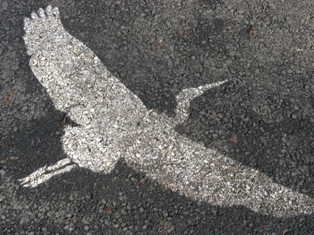
The picture wire at the end of the hook
snapped at the last moment, and
the frame dropped to the parking lot
shards of glass, shattered flight
snapped at the last moment, and
I could only think, “Ironic!”
shards of glass, shattered flight
you asked, “What did you do?”
I could only think, “Ironic!”
and get the painting out of the rain
you asked, “What did you do?”
I said, “Nothing, the guide wire just broke.”
and get the painting out of the rain
a downpour replaced any tears
I said nothing. The guide wire just broke.
And picked up the pieces, no more apologies.
a downpour replaced any tears
you tenderly laid the painting in your Pathfinder
And picked up the pieces, no more apologies.
We shook hands and went our discrete ways.
Thursday, November 30, 2006
Last Day of November
November has always been a difficult month for me...Season of death I suppose~ entering Advent, but not there yet.
It's about Matisse blue paint
on slanted attic walls,
crisp white wainscoting
and a view from above:
frozen raindrops
on bare oak branches
and Christmas lights hanging
from the eaves.
It's about moving in
and moving out
getting away
from the stinging ocean spray
salty...
well, you know what's next
after salty (in a sad poem).
It's about tears
and torn hearts
and other Hallmark sentiments,
although Hallmark doesn't
make cards for unrequited love
and getting shit on;
love 'em and leave 'em,
used and discarded:
Especially for you
When you are feeling blue
You would have had better luck
If I hadn't been such a fuck.
But it's really not about that
anymore. It's about
fresh paint
and fresh starts
clean slates
and clear...
(hearts? is that what you expected to hear?)
Well, not today
Today, it's just about
crystal prisms that catch
even the smallest
amount of Oregon light
and it's about being
eye-level with the seagulls
as I initiate the morning
with a poem
and they with flight.
It's about Matisse blue paint
on slanted attic walls,
crisp white wainscoting
and a view from above:
frozen raindrops
on bare oak branches
and Christmas lights hanging
from the eaves.
It's about moving in
and moving out
getting away
from the stinging ocean spray
salty...
well, you know what's next
after salty (in a sad poem).
It's about tears
and torn hearts
and other Hallmark sentiments,
although Hallmark doesn't
make cards for unrequited love
and getting shit on;
love 'em and leave 'em,
used and discarded:
Especially for you
When you are feeling blue
You would have had better luck
If I hadn't been such a fuck.
But it's really not about that
anymore. It's about
fresh paint
and fresh starts
clean slates
and clear...
(hearts? is that what you expected to hear?)
Well, not today
Today, it's just about
crystal prisms that catch
even the smallest
amount of Oregon light
and it's about being
eye-level with the seagulls
as I initiate the morning
with a poem
and they with flight.
Tuesday, November 21, 2006
Frank McCourt
Last night I went to hear Frank McCourt, author of Angela's Ashes, Tis, and Teacher Man, read with the Literary Arts Lecture Series. My last work site gave me free tickets. I was looking forward to hearing an Irish accent. I have a fondness for that accent every since my I met Annie Callan, a local writer and gentle teacher who used to call me "Wendy luv" and I not only felt like the most important person in the world, but she also made me feel like a pretty good writer. I digress. Did you know that Frank McCourt was also a teacher? He taught 33 years in the NY schools. He had stories to tell, like we all do. When asked why it took him until age 66 to publish his novel he said, "I was teaching, that's what took me so long...When you teach five high school classes a day, five days a week, you're not inclined to go home to clear your head and fashion deathless prose. After a day of five classes your head is filled with the clamor of the classroom."
When I read that in his bio I had an odd longing for days of 5-7 classes and 2-4 hours of paper grading every week night. I bitched and moaned at the time and flew into a rage every time someone said teacher's have it easy. As McCourt said, "You try it!" But last night, when McCourt called teachers heroic and an audience of 1500 applauded ~ when he would like to shoot the No Child Left Behind bill and the audience applauded ~ I had renewed pride for the my profession, for my greatest talent. Beyond writing, poetry, dancing, singing, healing, creating events, and coming up with good ideas, I am a teacher. AND I still have time to publish my book!
When I read that in his bio I had an odd longing for days of 5-7 classes and 2-4 hours of paper grading every week night. I bitched and moaned at the time and flew into a rage every time someone said teacher's have it easy. As McCourt said, "You try it!" But last night, when McCourt called teachers heroic and an audience of 1500 applauded ~ when he would like to shoot the No Child Left Behind bill and the audience applauded ~ I had renewed pride for the my profession, for my greatest talent. Beyond writing, poetry, dancing, singing, healing, creating events, and coming up with good ideas, I am a teacher. AND I still have time to publish my book!
Subscribe to:
Posts (Atom)